
2024 Wastewater Management: A Year of Progress
2024 Wastewater Management: A Year of Progress
- Widespread Adoption of Zero Liquid Discharge (ZLD) Systems
- AI and IoT Integration for Monitoring
- Advances in Membrane Technologies
- Sector-Specific Solutions
- Green Chemistry
The chemical industry adopted green processes to minimize hazardous effluents, supporting global sustainability goals and improving responsible wastewater management practices.
What to Expect in 2025
What to Expect in 2025
The upcoming year is poised to accelerate these trends, with new technologies and strategies reshaping the industrial water landscape. Here's what to watch for:
- Automation and Digital Twins
Automation will deepen its roots in 2025, with digital twin technology enabling virtual simulation of water treatment systems. These models will allow industries to optimize processes and troubleshoot issues virtually. - Advanced Biological Treatment Solutions
Biological treatment processes will see innovations, with microbial consortia engineered for high-efficiency organic load removal in complex industrial effluents. - Carbon-Neutral Water Management
Industries will focus on integrating renewable energy into water treatment operations, aiming for carbon neutrality. Solar-powered desalination and wind-powered pumps will gain popularity.
- Circular Water Economy
The concept of a circular water economy, emphasizing reuse and resource recovery, will dominate. Technologies for extracting valuable by-products like salts, nutrients, and biogas from wastewater will see increased deployment. - AI-Driven Compliance Monitoring
Compliance will no longer be manual. AI-based tools will continuously analyze discharge parameters to ensure adherence to regulations, minimizing penalties and fostering sustainability.
Filtration and Water Quality Technologies for 2025
Filtration and Water Quality Technologies for 2025
- Smart Sensors and Real-Time Analytics
- Modular Treatment Plants
- Electrochemical Treatment Systems
- Innovative Filtration Media
- Water Recovery Enhancers
New chemicals and additives designed to improve recovery rates in RO and other treatment systems will gain popularity, particularly in water-scarce regions, supporting efficient water management and water reuse.
Conclusion
Conclusion
The industrial water and wastewater management sector is entering an era of smarter, greener, and more resilient practices. With groundbreaking technologies and sustainable strategies on the horizon, 2025 promises to be a year of transformative change. Businesses investing in these trends now will not only ensure compliance but also achieve long-term cost savings, improved Water Quality, and environmental stewardship.
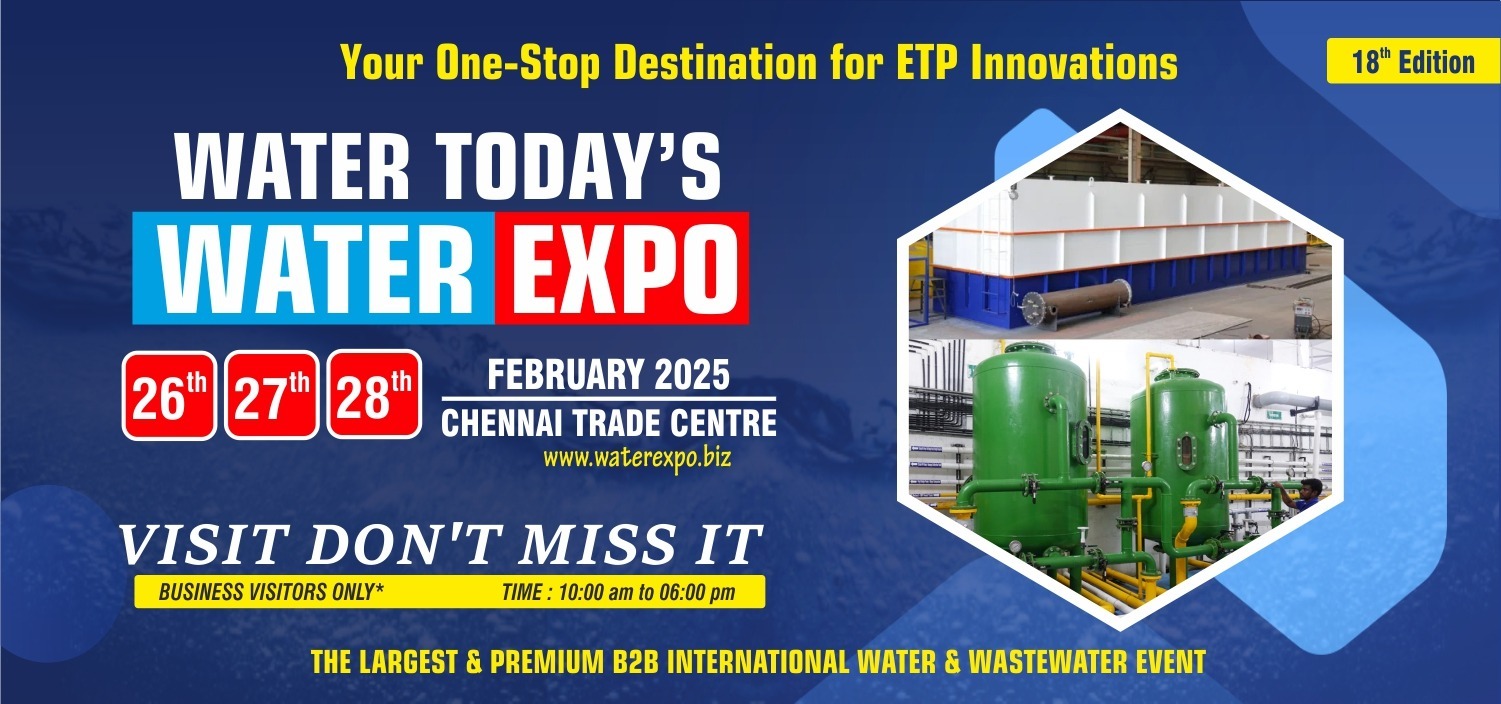
We look forward to showcasing these transformative technologies at the 18th Water Expo Chennai—an event that promises to be a hub for innovation, collaboration, and progress in wastewater management. Mark your calendar and join us in exploring cutting-edge filtration, treatment, and water management solutions shaping the future of water sustainability.